Like diamonds, gold is a priceless material that has been sought after for centuries when it comes to jewelry and adding wealth to your accessory collection. Also like diamonds, their purity is measured in karats (with a ‘k’ instead of a ‘c’).
If you’ve started to shop for gold jewelry to add elegance to your everyday attire, then you might have noticed the different purities levels such as 10k, 14k, 18k, and 24k. In this guide, we’re going over gold purity, how to understand the different karats, and which gold purity level is best for you.
Carat is a unit of measurement used to measure the purity of gold content within a piece of jewelry. There are four popular different levels of gold purity within jewelry: 24k, 18k, 14k, and 10k. Each contains a different amount of gold and other metals in the pieces.
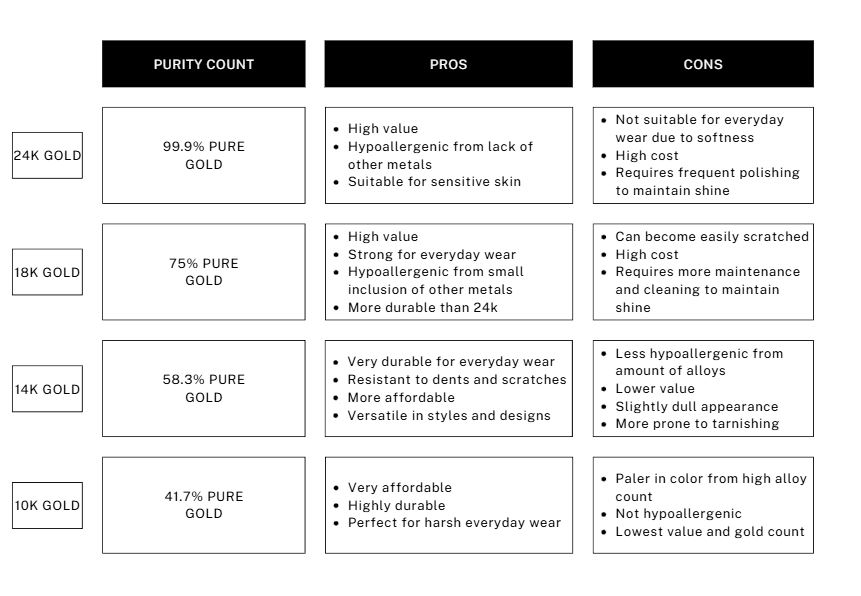
Here’s a breakdown of how pure each gold karat level is.
While 24k gold is completely pure, it is too soft to use for jewelry. 24k gold is extremely susceptible to bending, scratches, and dents, so it’s not ideal for everyday wear. 18k, 14k, and 10k gold pieces are mixed with alloys like copper, zinc, palladium, nickel, and more to add the durability and strength each piece needs to make it suitable for everyday use by preventing bending and scratches.
The Karat Breakdown: Features & Differences
Let’s break down each karat count further to note the features, similarities, and differences.